Expect a Fiano from Antica Hirpinia that showcases the rich, textured nature of this ancient southern Italian white grape. While its origin is unknown, we know it comes from the same family as Fiano di Avellino, known for its citrus, pear, and floral notes with a touch of hazelnut and sometimes a smoky or waxy texture. Grown in cooler sites, this wine likely offers more complexity and longevity than many warm-climate whites. With time, it may develop deeper nutty, honeyed, and mineral tones, making for an engaging palate experience that pairs well with a variety of dishes including seafood, roast chicken, and aged cheeses.

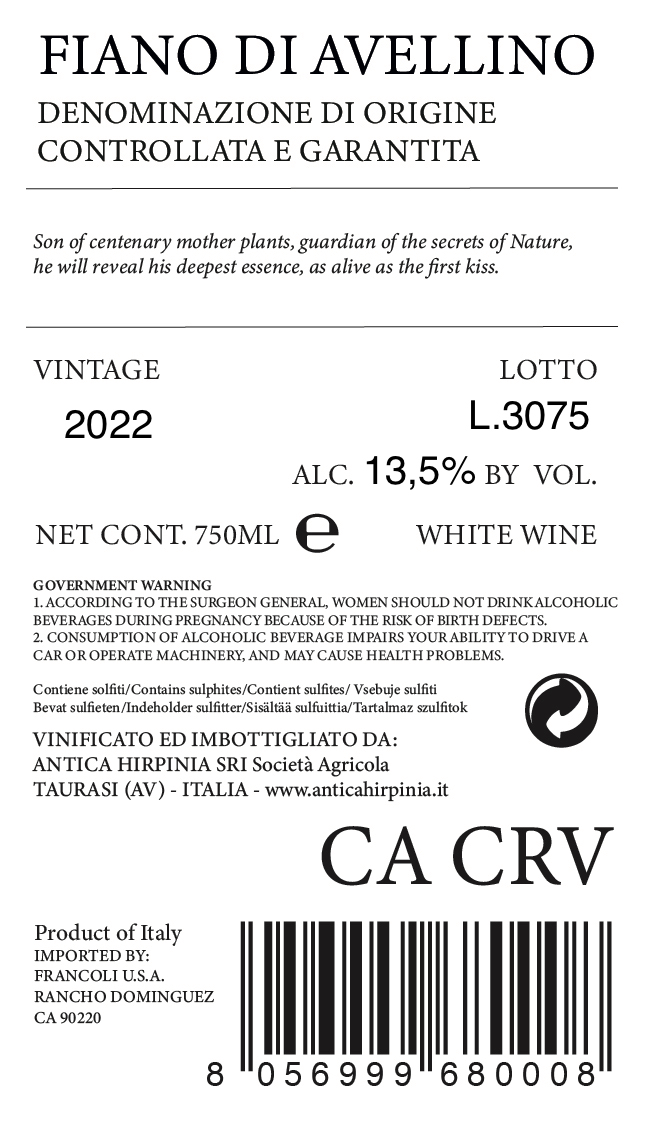
| TTB ID | 23202001000549 |
|---|---|
| Brand name | ANTICA HIRPINIA |
| Class / type | — |
| Origin / appellation | — |
| Grape varietals | FIANO |
| Approval date | Jul 26, 2023 |
| Status | APPROVED |
| Serial number | 23AHFI |
| Permit number | CA-I-4584 |
| Producer name & address | FRANCOLI U.S.A., FRANCOLI U.S.A. 18924 S LAUREL PARK RD RANCHO DOMINGUEZ CA 90220 |
| TTB record | View on TTB COLA Online → |
TTB remains the source of record. Wine Grabber links each record back to the public COLA detail when available.
View official TTB record →What would you like to do next?
Wine Grabber is a free public registry. Pick the path that fits you — your choice helps us learn what people come here for.